

No-Fee Credit Cards: 7 Hidden Costs Banks Don't Tell You About
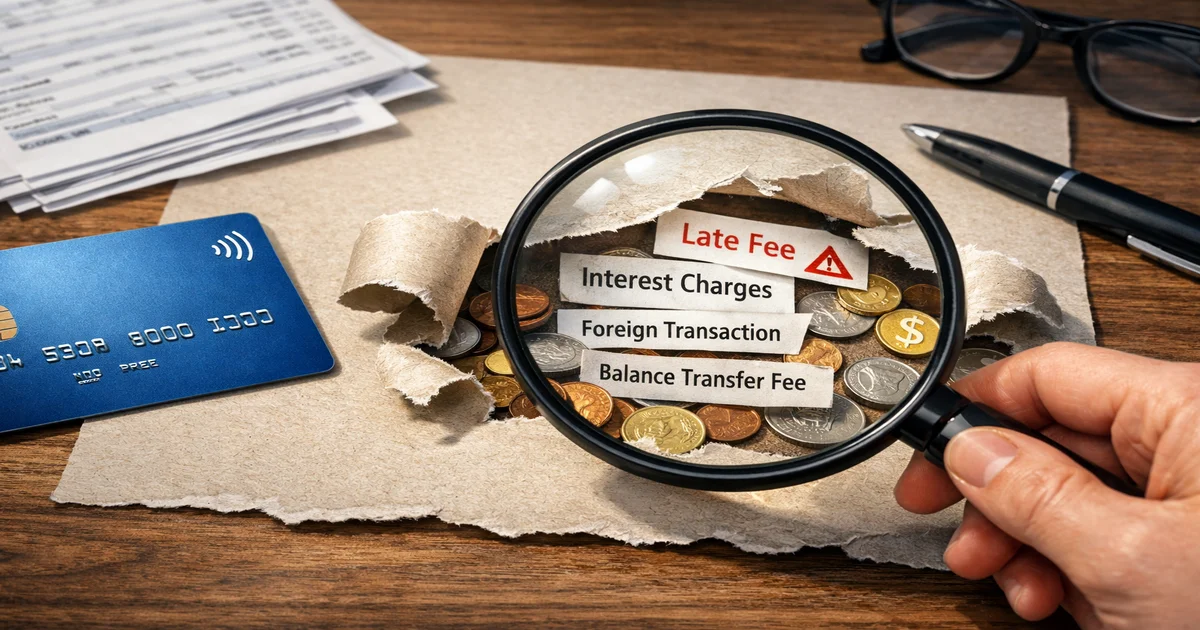
I thought I was smart getting a “no annual fee” credit card. Six months later, I discovered I’d been hit with $247 in hidden charges that weren’t mentioned anywhere in the marketing materials. The worst part? Most of these fees are completely avoidable once you know what to look for.
TL;DR
A $247 hidden-fee bill accumulated in 6 months on a “no annual fee” card — more than most $95-fee cards cost per year.
Cash advance APRs of 25–30% start accruing the same day with no grace period, unlike regular purchase interest.
Set up autopay for the full statement balance and never use your card for cash withdrawals or money orders.
Banks love advertising “no annual fee” because it gets you in the door. But here’s what I learned after analyzing dozens of credit card agreements and my own painful experience: these cards often cost more than cards with annual fees when you factor in all the sneaky charges.
Let me show you exactly what banks are hiding and how to avoid getting caught like I did.
What Makes Banks Profit from “Free” Credit Cards?
Banks aren’t charities. When they offer a credit card with no annual fee, they’re making money somewhere else.
The primary revenue streams are interchange fees from merchants (2-3% of every purchase) and interest charges if you carry a balance. But those aren’t the hidden costs I’m talking about.
The real problem is the fees they bury in the fine print. These charges can easily add up to more than a $95 annual fee, especially if you’re not careful about how you use the card.
Hidden Cost #1: Foreign Transaction Fees on Everything
This one got me first. I bought a book from a UK website for $23, and got charged an extra $0.69 as a “foreign transaction fee.”
Most no-fee cards charge 2.5-3% on any purchase made outside the US or with a foreign merchant. That includes online purchases, even if you’re sitting in your living room in Ohio.
Here’s what counts as a foreign transaction:
- Online purchases from international websites
- Purchases while traveling abroad
- Subscriptions to foreign services (Netflix UK, Spotify from Sweden)
- Even some domestic merchants that process payments overseas
The fee applies to the total transaction amount, not just the foreign portion. I learned this when I got charged on a $150 hotel booking in Miami because the hotel chain processed payments through their Canadian headquarters.
Why Don’t Banks Advertise These Fees Upfront?
Because they know most people would choose a different card. A 3% foreign transaction fee on a $2,000 vacation easily costs $60 – more than many annual fees.
Banks with premium cards often waive foreign transaction fees entirely. The Chase Sapphire Preferred has a $95 annual fee but no foreign transaction fees. Do the math on any international spending and the “expensive” card often costs less.
Hidden Cost #2: Cash Advance Fees That Hit Immediately
Cash advances are expensive, but the fees are worse than most people realize. Every no-fee card I’ve analyzed charges both an upfront fee AND a higher interest rate that starts immediately.
The typical structure:
- Cash advance fee: $10 or 5% of the amount (whichever is higher)
- Cash advance APR: 25-30% (starts immediately, no grace period)
- ATM fees: $2-5 additional if using out-of-network ATMs
I watched a friend get a $500 cash advance and pay $25 upfront, plus $10 in ATM fees, plus interest that started accumulating that same day. He thought he’d pay it back in a week, but that week cost him another $12 in interest charges.
What counts as a cash advance isn’t always obvious either. Money orders, wire transfers, cryptocurrency purchases, and even some bill payments can trigger cash advance fees.
Hidden Cost #3: Balance Transfer Fees for “0% APR” Offers
Those tempting 0% APR balance transfer offers come with upfront fees that banks barely mention in their marketing.
Standard balance transfer fees range from 3-5% of the transferred amount. Transfer $5,000 to take advantage of 0% APR, and you immediately owe $150-250 in fees.
I ran the numbers on a popular no-fee card advertising “0% APR for 18 months on balance transfers.” The 3% transfer fee meant you’d need to save more than that in interest to break even. For many people, it wasn’t worth it.
Some cards cap the fee at $5 or $10, but these are rare and usually come with other restrictions. Always calculate the total cost including fees before doing any balance transfer.
How This Affects Your Credit Card Investment Strategy
If you’re using credit cards strategically for rewards or to optimize your finances, these hidden fees can destroy your returns.
Say you earn 1.5% cashback but pay 3% in foreign transaction fees. Every international purchase loses you 1.5%. Your “rewards” card is actually costing you money on a significant portion of your spending.
Hidden Cost #4: Over-Limit Fees That Shouldn’t Exist
This one surprised me because I thought over-limit fees were mostly eliminated after the CARD Act of 2009. They weren’t eliminated – they were just made “opt-in.”
Many people unknowingly opt in during the application process or through online banking without realizing what they’re agreeing to. The fees typically range from $25-39 each time you exceed your credit limit.
Here’s the sneaky part: some transactions can push you over the limit even when you think you’re under it. Pending authorizations, interest charges, and other fees can all contribute to pushing your balance over the limit.
I’ve seen people get hit with multiple over-limit fees in a single billing cycle because each day they remained over the limit triggered a new fee.
Hidden Cost #5: Returned Payment Fees for Technical Issues
Banks charge $25-40 when a payment is returned, even if it’s not your fault. I learned this when my bank processed a payment a day late due to a weekend, causing my credit card payment to bounce.
The returned payment fee was $35, plus I got charged a late payment fee of $40 on the credit card side. A technical timing issue cost me $75.
What triggers returned payment fees:
- Insufficient funds (obviously)
- Bank processing delays
- Incorrect account numbers (even a single digit off)
- Payments made too close to the due date
- Technical issues with online payment systems
The worst part is these fees often cascade. A returned payment can trigger late fees, penalty APR increases, and damage to your credit score.
Hidden Cost #6: Expedited Payment Processing Fees
Need to make a payment today to avoid a late fee? That’ll cost extra.
Most no-fee cards charge $5-15 for same-day payment processing. Phone payments often cost even more – sometimes $25 just to speak with a representative who can process your payment immediately.
I got caught by this when I realized I’d forgotten to make a payment that was due the next day. The $10 expedited payment fee was cheaper than the $40 late fee, but it still felt like being punished for their inflexible payment processing.
Some cards offer free expedited payments if you use their mobile app, but this isn’t universal. Always check if there are free same-day payment options before paying the expedited fee.
Hidden Cost #7: Paper Statement and Communication Fees
This might seem minor, but it adds up. Many cards now charge $1-5 per month if you want paper statements mailed to you.
Additional communication fees include:
- Paper statements: $1-3 per month
- Duplicate statements: $5-10 each
- Stop payment requests: $25-35
- Account research fees: $25 per hour
- Expedited card replacement: $5-25
For older customers or those who prefer paper records, these fees can add $12-60 annually. That’s approaching the cost of an annual fee on a premium card with better benefits.
Are There Actually Fee-Free Credit Cards?
Yes, but they’re rare and usually come with trade-offs. The truly fee-free cards typically offer minimal rewards and basic features.
Cards that genuinely avoid most hidden fees:
- Citi Double Cash (2% on everything, no foreign transaction fees)
- Capital One Quicksilver (1.5% cashback, no foreign transaction fees)
- Discover it Cash Back (rotating 5% categories, no foreign transaction fees)
Notice a pattern? The best no-fee cards eliminate foreign transaction fees, which is often the biggest hidden cost.
How to Avoid These Hidden Costs
The key is reading the full terms and conditions, not just the marketing materials. I know it’s boring, but 30 minutes of reading can save you hundreds in fees.
Before applying for any card:
- Download the full pricing and terms document
- Search for “fees” and read every mention
- Calculate potential costs based on your spending patterns
- Compare the total cost including fees to cards with annual fees
Set up automatic payments to avoid late and returned payment fees. Use mobile apps for same-day payments when needed. Keep your spending well below your credit limit to avoid over-limit situations.
Most importantly, track your statements monthly and question any fees you don’t understand. Banks will often reverse fees if you call and ask, especially if it’s your first occurrence.
Should You Choose Cards with Annual Fees Instead?
Sometimes, yes. Premium cards with annual fees often provide better value when you factor in all the hidden costs they eliminate.
A card with a $95 annual fee but no foreign transaction fees, no cash advance fees, and premium customer service can easily cost less than a “free” card if you travel internationally or need flexibility.
The break-even analysis depends on your spending patterns, but don’t automatically dismiss cards with annual fees. Run the numbers including all potential hidden costs.
Conclusion
After six months of tracking every fee and analyzing dozens of credit card agreements, I’ve learned that “no annual fee” is often just marketing speak. The real cost of a credit card includes all the hidden fees that banks hope you won’t notice or calculate. The best approach is to treat credit card selection like any other financial investment. Calculate the total cost of ownership, not just the advertised price. A card that costs $95 upfront but saves you $200 in hidden fees is a better deal than a “free” card that nickel-and-dimes you all year.
Frequently Asked Questions
-
Do all no-fee credit cards have hidden costs?
Most do, but some genuinely avoid major fees like foreign transactions. Read the full terms before applying. -
Which hidden fee costs the most money annually?
Foreign transaction fees typically cost the most, averaging $200-400 per year for frequent international spenders. -
Can I negotiate to have hidden fees removed?
Often yes, especially for first-time occurrences. Call customer service and politely ask for fee reversals. -
Are premium cards with annual fees actually cheaper?
They can be if you use benefits that offset hidden costs, particularly for travel and international purchases. -
How can I avoid cash advance fees entirely?
Never use your credit card for cash advances. Use debit cards or bank transfers for cash needs instead.
⚠️ Disclaimer: This article is educational and does not constitute investment, credit, tax, or legal advice. Rates, products, and regulations change. Consult a certified professional (accountant, financial advisor, lawyer, or your bank) before making decisions based on this content.